
Parking Robot Manufacturer for Automated Parking Systems
- Home
- »
- Parking Robot
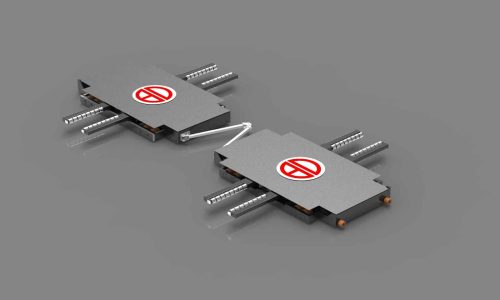
Spaceplus designs and manufactures vehicle transfer robots for automated parking projects. Choose from G1, G2 and G3 parking robots according to vehicle load, floor conditions, parking layout and system requirements.
G1 / G2 / G3 Robot Models
Up to 3,000 kg Vehicle Capacity
For Storage & Automated Parking
Layout and System Integration Support
What Is a Parking Robot?
A parking robot is an automated vehicle transfer device used inside robotic and automated parking systems.
Its main function is to move a vehicle between different parts of the parking system without requiring the driver to remain inside the vehicle.
Depending on the parking layout, the robot can transfer vehicles between:
- Entrance or transfer cabins
- Vehicle lifts
- Transfer lanes
- Storage areas
- Parking positions
A parking robot is therefore one important component of a complete robotic parking system.
Is a Parking Robot Suitable for Your Project?
Parking robots are most suitable for projects that require fully automated vehicle storage and retrieval.
A Parking Robot May Be Suitable When:
- Drivers should not enter the vehicle storage area.
- The garage requires automated vehicle transfer.
- The project needs higher parking density.
- Conventional driving aisles occupy too much usable space.
- Vehicles must be transferred automatically between lifts and parking positions.
- The project has enough parking capacity to justify robotic automation.
- The garage floor and structure can meet robot operating requirements.
- The project requires centralized parking management.
- Remote monitoring and intelligent scheduling are required.
Spaceplus can compare parking robot, AGV, tower, shuttle and other automated parking solutions before recommending a system.
Spaceplus Parking Robot Models
Spaceplus provides different parking robot designs for different garage conditions.
Robot selection should consider more than vehicle weight. Floor flatness, clear height, parking layout, vehicle dimensions, transfer route and power supply can all affect which robot is suitable.
Parking Robot G1
The Spaceplus Robot G1 is designed for automated vehicle transfer applications where the garage conditions and parking architecture match its operating characteristics.
G1 May Be Suitable For:
- Automated parking garages
- Structured vehicle-transfer layouts
- Projects requiring reliable vehicle movement between fixed parking zones
- New-build automated parking projects
Parking Robot G2
The Spaceplus Robot G2 is another vehicle-transfer solution for automated parking systems.
Based on current Spaceplus product data, G2 can support vehicle loads of up to approximately 3,000 kg, subject to final technical confirmation.
G2 May Be Suitable For:
- Projects with heavier passenger vehicles
- Parking systems accommodating SUVs
- Commercial automated parking
- Large residential developments
- Public parking projects
Lets Connect to Discuss Your Requirements
Drop a message your team will get back to you
Comparison of Parking Robots
Each robot has its advantage and disadvantages like the data below.
Type | G1 | G2 | G3 |
Thickness | 220mm | 100mm | 80mm |
Load | 3000kg | 3000kg | 2700kg |
Clearance between floor to floor | 1850mm | 1650mm | 1630mm |
Requirement of parking floor flatness | ±50mm | ±8mm | ±5mm |
How Does a Parking Robot Work?
A parking robot transfers vehicles automatically after the driver has left the parking area.
A typical robotic parking process includes the following steps.
Step 1: Vehicle Enters the Transfer Cabin
The driver parks the vehicle inside an entrance or transfer area. Parking guidance can help position the vehicle correctly.
Step 2: Vehicle Position Is Checked
Sensors confirm that: The vehicle is correctly positioned. Vehicle dimensions are within limits. Vehicle weight is acceptable. No person or obstacle remains in the operating area. The transfer process does not begin until the safety conditions are confirmed.
Step 3: Parking Robot Approaches the Vehicle
The robot moves into the required transfer position according to the control system instructions. Depending on the robot design, it positions itself underneath or around the vehicle.
Step 4: The Vehicle Is Supported or Lifted
The robot engages with the vehicle using its designed lifting or supporting mechanism. The exact transfer principle depends on the selected Spaceplus robot model.
Step 5: Vehicle Is Transported
The robot transports the vehicle to the required location, which may include: A parking bay, Vehicle lift, Transfer aisle, Storage zone, Retrieval area
Step 6: Vehicle Is Positioned
The robot accurately places the vehicle in the assigned position. The parking management system records the vehicle location and updates the available parking capacity. When the user requests the vehicle, the process operates in reverse.
Parking Robot Applications
Parking robot requirements vary significantly between residential, commercial and public parking projects.
Commercial Buildings
Airports
Hospitals
Residential
Why Choose Spaceplus
Parking robot procurement should consider more than robot dimensions and equipment price.
The manufacturer should understand the complete parking architecture.
Get a Parking Robot Recommendation for Your Project
A parking robot should be selected according to the complete garage layout rather than vehicle load alone.
Our engineering team can evaluate:
- Suitable parking robot model
- G1 / G2 / G3 selection
- Whether AGV is more suitable
- Estimated robot quantity
- Vehicle compatibility
- Floor requirements
- Robot travel route
- Vehicle-lift integration
- Control system requirements
- Preliminary equipment configuration
Information to Provide
Send Spaceplus your parking capacity, garage dimensions, vehicle requirements and expected traffic demand.